Arizona 2026

Sonoran Science Academy

Tucson, AZ

PROJECT TITLE
AquaWhisper
listens to plants and delivers perfect drops

PROJECT GOAL: Water scarcity is a major challenge in Tucson, where long-term drought and high temperatures strain limited water supplies. Many homeowners with desert landscaping unintentionally waste water by overwatering plants that require minimal irrigation. This not only increases household water use but also places stress on local water systems and community gardens. Our project aims to reduce unnecessary water consumption by delivering the exact amount of water each plant species needs.

To identify the most pressing water-related needs in our community, we reviewed local drought reports and guidelines from water agencies. We observed that many households with diverse landscaping overwater plants because they do not know the amount of water required for each species. In the Tucson metro area, roughly 40% of residential water use goes to outdoor/landscape irrigation, according to the City of Tucson (.gov). Several community gardens expressed similar challenges, with volunteers frequently watering plants unevenly. We spoke with homeowners and garden coordinators who described difficulty keeping plants healthy during extreme heat while trying to conserve water. These conversations helped us understand that users want a simple, plant-specific watering system that reduces waste without requiring constant monitoring. We selected homeowners with diverse landscaping as our primary user group because they represent a large portion of local water consumption. Community gardens/Landscapers serve as the secondary group facing similar challenges.
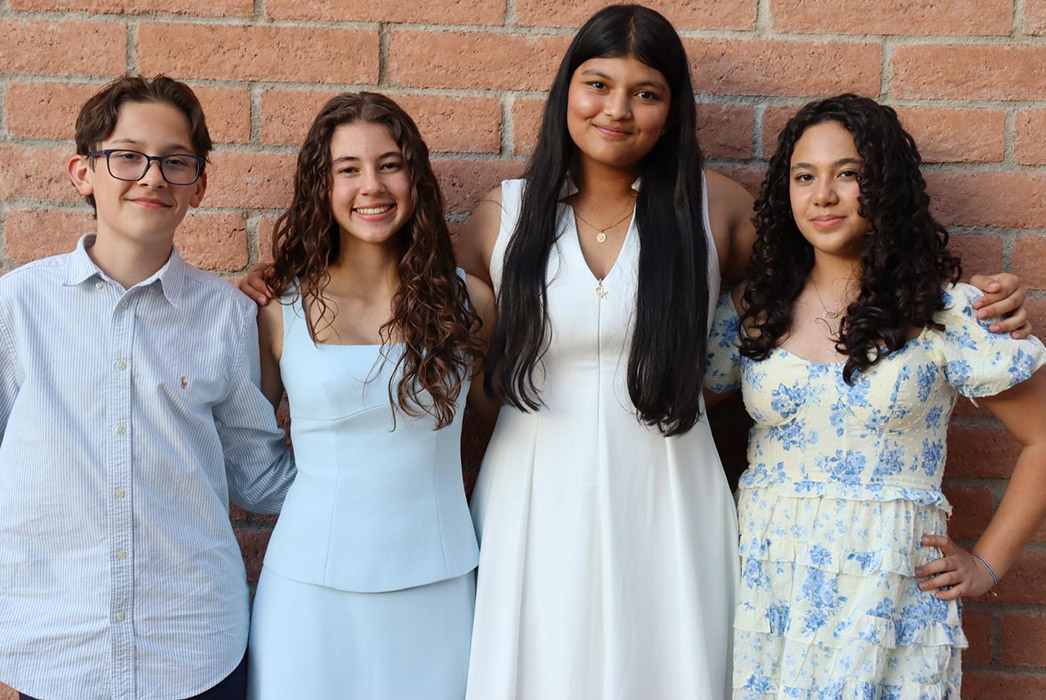
Angelique Correa, Anika Kasaragod Pallath, Johnathan Barbeau II, Jake Fraserpopup

TEAM MEMBERS: Angelique Correa, Anika Kasaragod Pallath, Johnathan Barbeau II, Jake Fraser

TEAM ADVISOR(S): Rasmitha Pallath, Jomaly Cotto

Desert Shadows Middle School

Nogales, AZ

PROJECT TITLE
NaviSense: See the Unseen.
The Future of Navigating Overhead Obstacles for the Visually Impaired

PROJECT GOAL: The visually impaired community lacks resources aiding them in everyday life, which leaves them prone to injuries. In Nogales, Arizona, there is inadequate infrastructure such as worn-down truncated domes and sidewalks, and unsafe overhead obstacles. These obstacles often hinder the visually impaired community’s mobility and prevent full independence. A study initiated in 2012 expressed that the visually impaired population in the U.S. was estimated to double by 2050, emphasizing this growing concern (cdc.gov).

We began our research by asking community members what inequities they had seen or encountered. 7 out of 10 members pointed out details relating to Nogales’ poor infrastructure especially affecting people with disabilities. Nogales is a binational community dealing with many of Mexico’s problems. Severe issues include flooding due to overflowing arroyos and washes and poorly maintained sewage pipelines, negatively affecting our roads and sidewalks. Runoff also causes property damage and creates hazards. As a major port for international trade, Nogales experiences heavy commercial truck traffic also affecting the conditions of our infrastructure by dislocating trees and signs. Our low per capita income and tax base limits street and facility maintenance and repairs. Our research on infrastructure led us to focus on the visually impaired community realizing that they did not have the appropriate environment to navigate Nogales safely. After deciding which disability to focus on, we found our client.

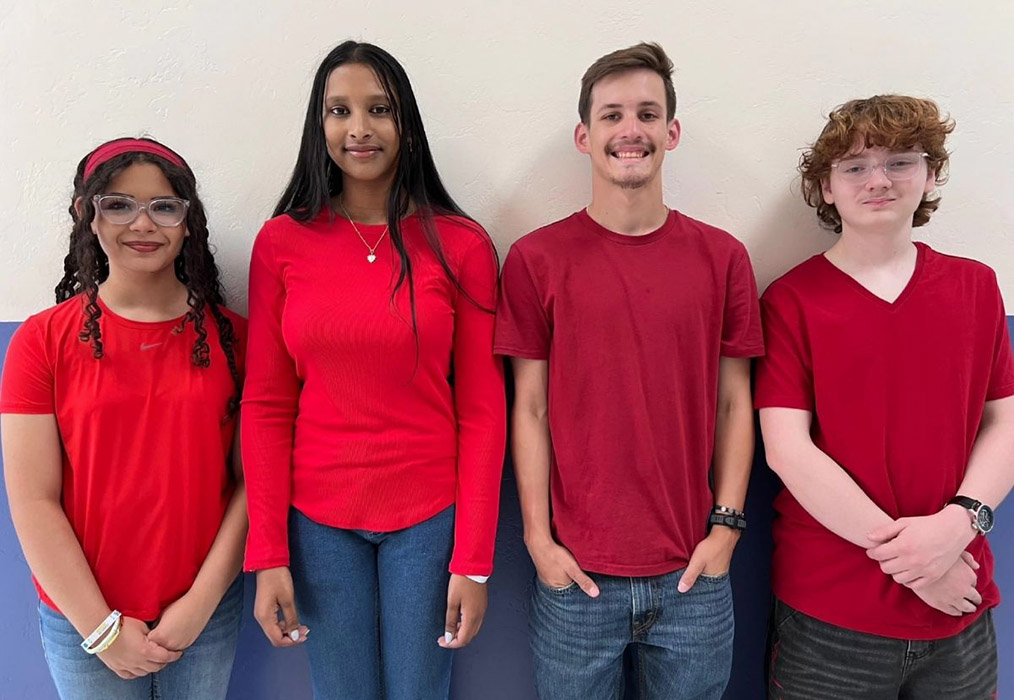
Kenneth Olmos, Ava Wise, Dakshita Chauniyal, Laila Calixtropopup

TEAM MEMBERS: Kenneth Olmos, Ava Wise, Dakshita Chauniyal, Laila Calixtro

TEAM ADVISOR(S): Roxanne BellRasmitha Pallath, Jomaly Cotto

Rudy McCormick, Arizona 2026 MESA Director | Manny Leon, Bill Pike, Rules Committee | State Website

We use cookies in order to give you the best possible experience on our website. By continuing to use this site, you agree to our use of cookies.
Accept
Privacy Policy