Maryland 2025

Reservoir High School

Fulton, MD

2nd Overall

PROJECT TITLE
Game Changer: Engineering Adaptive Controllers for Barrier-Free Play

PROJECT GOAL: People with limited dexterity face inequitable access to gaming—a socially, physically, and cognitively beneficial activity for billions – as traditional video game controllers are difficult to use. Furthermore, current adaptive controllers have high costs, complex setups, and limited compatibility. Neighboring a school for students with disabilities, we witnessed their struggles to socialize through gaming. Our project aims to address this, focusing on the UN SDGs #10 (Reduced Inequalities) and #3 (Good Health and Well-being).

Our proposed solution is a dual-faceted system with a controller and an app. Our controller design will feature larger, interchangeable buttons and joysticks with adjustable orientation. This will allow people with varying levels of limited dexterity to play diverse types of games by customizing their controller’s layout. The Arduino Leonardo board inside the controller will connect to the tactile buttons and joystick, processing button presses and joystick potentiometer movements and sending this information to a computer. The app will be on the user’s device, allowing the user to map the controller buttons to various functions and change the controls at any time through Serial communication. This effective, intuitive app allows for all personalized setups, meeting our goal of an adaptable design. The product will also be cost-effective and sturdy, utilizing 3D-printed parts to lower material costs while maintaining durability.
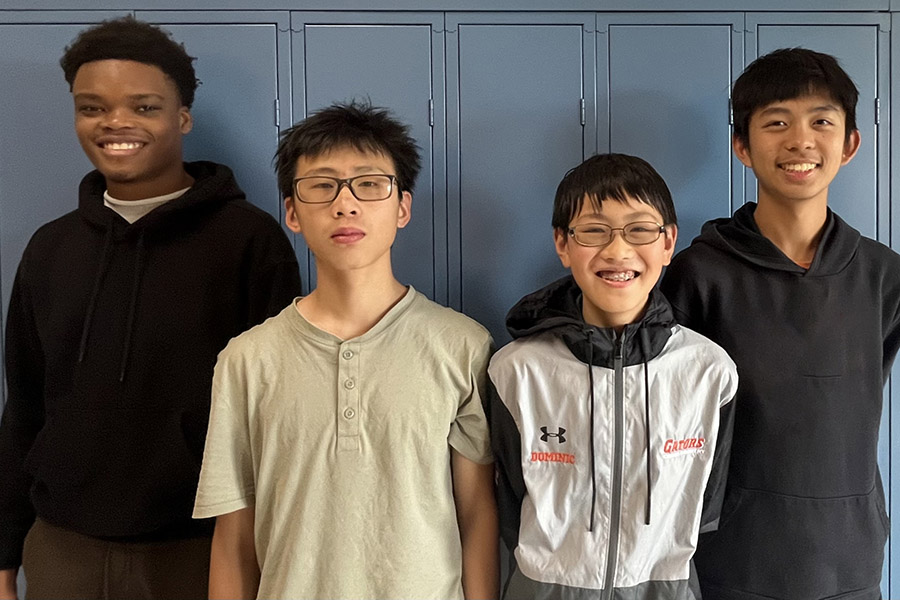
Ifelde A., Johnathan Y., Dominic Y., Cheren S.popup

TEAM MEMBERS: Ifelde A., Johnathan Y., Dominic Y., Cheren S.

TEAM ADVISOR(S): Dr. Katherine Yienger

Awards

  • 2nd - Design Proposal
  • 3rd - Academic Poster
  • 1st - Technical Pitch
  • 2nd - Symposium

Hallie Wells Middle School

Clarksburg, MD

2nd Overall

PROJECT TITLE
Flick – AI Math Tutoring With the Flick of a Switch

PROJECT GOAL: Flick addresses the economic inequity in education that low-income students face. These students struggle academically and are unable to afford tutoring, hindering U.N SDG 4.5, equitable access to quality education. Our research showed that among economically disadvantaged students, only 8.7% were proficient (Maryland State Department of Education, 2024). Students who are proficient in mathematics bring themselves out of poverty and make a difference in their community and the world.

Flick is an interactive math tutor designed for low-income students. To address this inequity, Flick includes these features:

1. AI: Flick uses a Raspberry Pi 5 as its controller. It manages inputs and outputs, directly connecting to the OpenAI API to ensure a distraction-free experience and personalized responses in real-time.

2. USB Camera: Flick has a USB camera that can rest on top of the box or be stored inside, capturing images of worksheets or notes. By analyzing these visuals, Flick tailors its support to match the content and format the student is working with.

3. Microphone & Speaker: Flick is equipped with a microphone, capturing voice input, while a built-in speaker allows Flick to respond aloud. This replaced a typing-based system once users requested a more interactive experience.

4. Raspberry Pi Screen: A screen mounted on the front displays Flick’s animated character and responses. This visual element creates a more engaging and easy-to-follow experience.

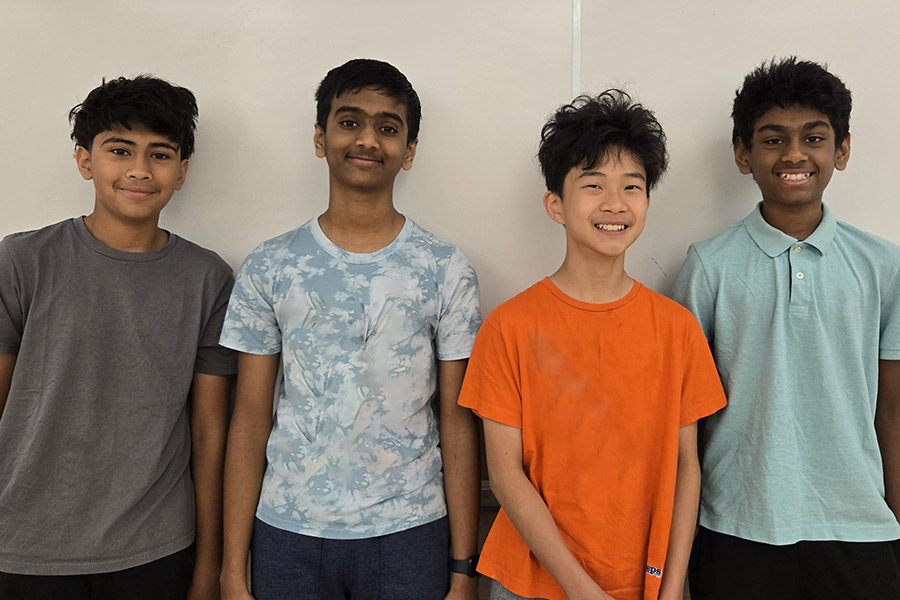
Sameer S., Ashrit M., Summit L., Rian G.popup

TEAM MEMBERS: Sameer S., Ashrit M., Summit L., Rian G.

TEAM ADVISOR(S): Dustin Deem

Awards

  • 2nd - Design Proposal
  • 1st - Academic Poster
  • 3rd - Technical Pitch
  • 2nd - Symposium
  • Delegates' Choice

Dwight Carr, Maryland 2025 MESA Director | Kelli Llano, Rules Committee | State Website

We use cookies in order to give you the best possible experience on our website. By continuing to use this site, you agree to our use of cookies.
Accept
Privacy Policy